
The process is essentially identical for both natural and synthetic detailing clay.
Make sure the vehicle surface is fully washed, rinsed and dried beforehand.Always use a lubricant with any clay product to allow smooth gliding over the paintwork and minimize the risk of swirls and fine scratches.For natural detailing clay, we recommend a dedicated clay lubricant.
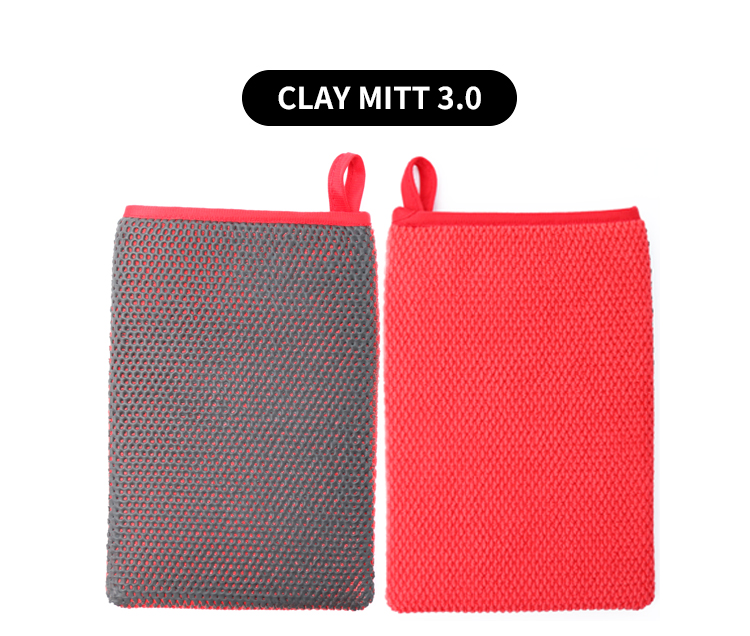
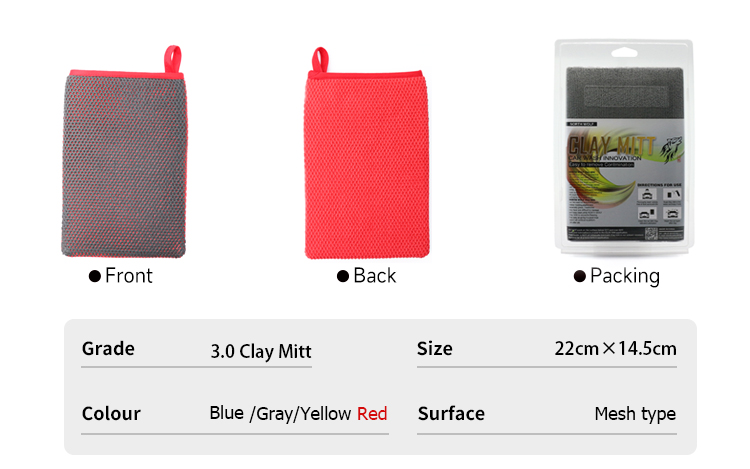
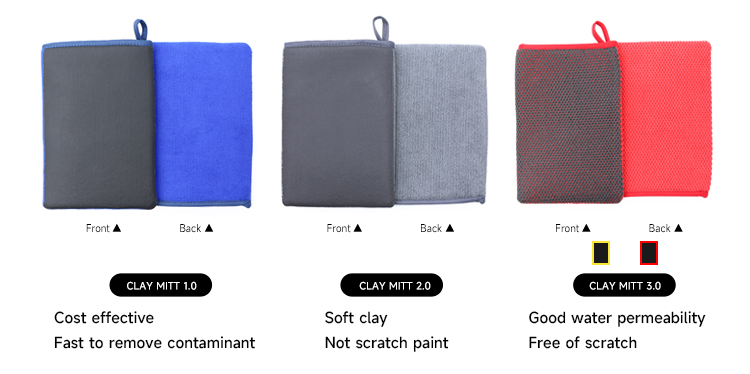
For synthetic clay, you may use clay lubricant, detailing spray, or diluted soapy water.Work on small individual panel sections at a time, and apply plenty of lubricant evenly over the painted surface.We also recommend lightly spraying the clay or clay mitt to keep sufficient lubrication throughout the process.Glide the clay mitt gently across the surface in a cross-hatch pattern: vertical passes followed by horizontal passes.Initial friction is normal; as surface contaminants are removed, the clay will glide much more smoothly.Check the clay surface frequently for embedded debris. Rinse the clay when soiled and reapply lubricant as you continue working.Once the section feels completely smooth with no drag or resistance, wipe the paint thoroughly with a clean microfiber towel.
Run your fingertips over the refined area and compare it with an untreated panel — the difference in smoothness will be obvious.Repeat the above steps on all body panels until the entire vehicle is fully decontaminated.Note that depending on the degree of surface imperfections, light polishing may be required after claying to remove minor micro-marring.If no fine marks are visible, apply wax or paint sealant right after the claying process for long-lasting protection.
Post time: Jun-06-2026